
📞 Tel:+86-750-3857665
Email:sales@enpowertec.com
Email:sales@enpowertec.com
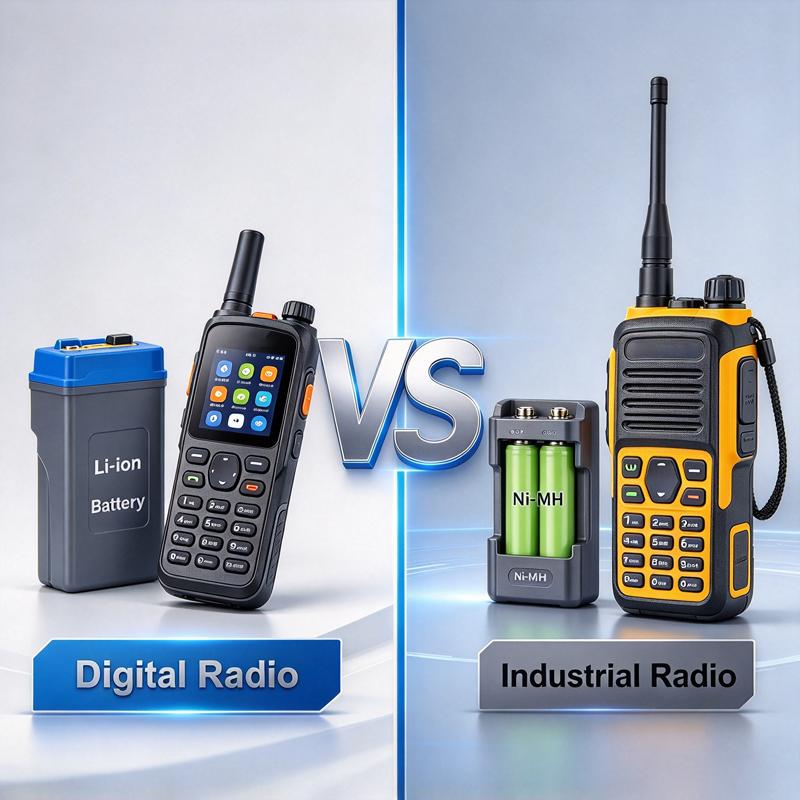
For professionals who rely on two-way radios every day, choosing the right battery is essential for ensuring reliable communication. Whether you work in public safety, security, construction, transportation, hospitality, or industrial operations, the battery inside your radio directly affects runtime, performance, and maintenance costs.
The two most common battery technologies used in two-way radios are Lithium-ion (Li-ion) and Nickel-Metal Hydride (Ni-MH) batteries.
So, Li-ion vs Ni-MH radio batteries - which one is the right choice for your communication equipment?
This guide explains the key differences between Li-ion and Ni-MH radio batteries to help you select the best battery solution for your application.
A Lithium-ion (Li-ion) radio battery uses lithium-ion cells to store and release energy. It has become one of the most popular battery technologies for modern two-way radios because of its high energy density, lightweight design, and long service life.
Li-ion batteries are widely used in:
Professional two-way radios
Digital radios (DMR)
Tactical communication equipment
Public safety radios
Industrial communication systems
Common advantages include:
Higher capacity in a smaller size
Lightweight design
Longer operating time
Low self-discharge rate
No memory effect
A Nickel-Metal Hydride (Ni-MH) radio battery is a rechargeable battery technology commonly used in older and industrial two-way radio models.
Ni-MH batteries are known for their:
Stable performance
Good safety characteristics
Wide operating temperature range
Compatibility with many legacy radio models
They are still widely used for replacement batteries in:
Commercial two-way radios
Industrial communication equipment
Older Motorola, Kenwood, HYT, Icom, and other radio systems
| Feature | Li-ion Radio Battery | Ni-MH Radio Battery |
|---|---|---|
| Energy Density | Higher | Lower |
| Weight | Lightweight | Heavier |
| Runtime | Longer operation time | Shorter runtime |
| Charging Speed | Faster | Slower |
| Memory Effect | No memory effect | Very low memory effect |
| Self-discharge | Lower | Higher |
| Temperature Performance | Good | Excellent |
| Cost | Higher initial cost | More economical |
| Service Life | Longer cycle life | Stable cycle performance |
Note: performance values above are typical comparisons between the two chemistries. Actual results depend on cell quality, pack design, charger matching and working conditions.
Battery capacity directly affects how long your radio can operate before recharging.
A Li-ion battery usually provides:
More power in the same physical size
Longer communication time
Better performance for high-demand applications
For example, a high-capacity Li-ion radio battery can support extended shifts for:
Security teams
Emergency responders
Warehouse operators
Field technicians
Ni-MH batteries generally provide reliable performance but may require more frequent charging when used continuously.
For users who need maximum runtime and reduced downtime, Li-ion batteries are often the preferred option.
For professionals carrying radios throughout the day, battery weight matters. Li-ion batteries offer:
This makes them ideal for:
Police and security personnel
Outdoor workers
Construction teams
Industrial operators
Ni-MH batteries are usually heavier because they require more cells to achieve similar capacity.
However, for some older radio models, Ni-MH remains the most practical replacement option due to compatibility requirements.
Li-ion batteries are easier to maintain because they:
Do not require full discharge before charging
Maintain capacity better during daily charging
Have lower self-discharge rates
Modern Li-ion radio batteries often include protection systems such as:
These features improve safety and reliability.
Ni-MH batteries are more tolerant of harsh conditions and can handle frequent charging cycles. However:
They usually need longer charging time
Capacity may decrease faster if not properly maintained
Self-discharge is higher compared with Li-ion
For users operating in demanding industrial environments, Ni-MH can still be a dependable choice.
Different working environments require different battery characteristics.
Daily professional communication
Long working shifts
Portable equipment
High-capacity applications
Extreme temperature environments
Industrial applications
Older radio systems
Cost-sensitive replacement projects
For example, forestry, construction, logistics, and industrial users may choose Ni-MH batteries when reliability under challenging conditions is the priority.
Before replacing your radio battery, compatibility should always be checked. A battery must match:
Examples of common replacement applications:
Motorola radio batteries
Kenwood radio batteries
HYT / Hytera radio batteries
Icom radio batteries
Tactical communication batteries
Even if Li-ion technology offers better performance, some older radios are designed specifically for Ni-MH batteries.
Choosing the correct battery chemistry ensures safe operation and maximum performance.
Longer operating time
Lightweight equipment
Faster charging
Higher energy density
Modern communication equipment
Li-ion is the preferred choice for most new-generation professional radios.
Reliable replacement for older radios
Stable industrial performance
Better temperature tolerance
Lower initial cost
Ni-MH remains a valuable solution for many legacy communication systems.
At Enpower Technology, we specialize in custom battery pack design and manufacturing for industrial communication equipment.
Our battery solutions include:
Two-way radio batteries
Tactical radio batteries
Industrial communication batteries
Custom Li-ion battery packs
Custom Ni-MH battery packs
We provide customized solutions based on:
Our battery packs can include:
With professional battery design and manufacturing capabilities, Enpower helps customers create reliable power solutions for demanding applications.
There is no single "best" battery type for every application.
Li-ion radio batteries are the best choice for users who need lightweight design, longer runtime, and modern performance.
Ni-MH radio batteries remain a reliable option for industrial equipment, legacy radios, and applications requiring stable operation in challenging environments.
The right choice depends on your radio model, working environment, runtime requirements, and budget.
Need a reliable two-way radio battery replacement or custom battery solution?
Contact Enpower Technology for professional battery design and manufacturing support.

Enpower integrates R&D, production and quality testing in-house, supporting custom battery solutions for worldwide buyers.