
📞 Tel:+86-750-3857665
Email:sales@enpowertec.com
Email:sales@enpowertec.com
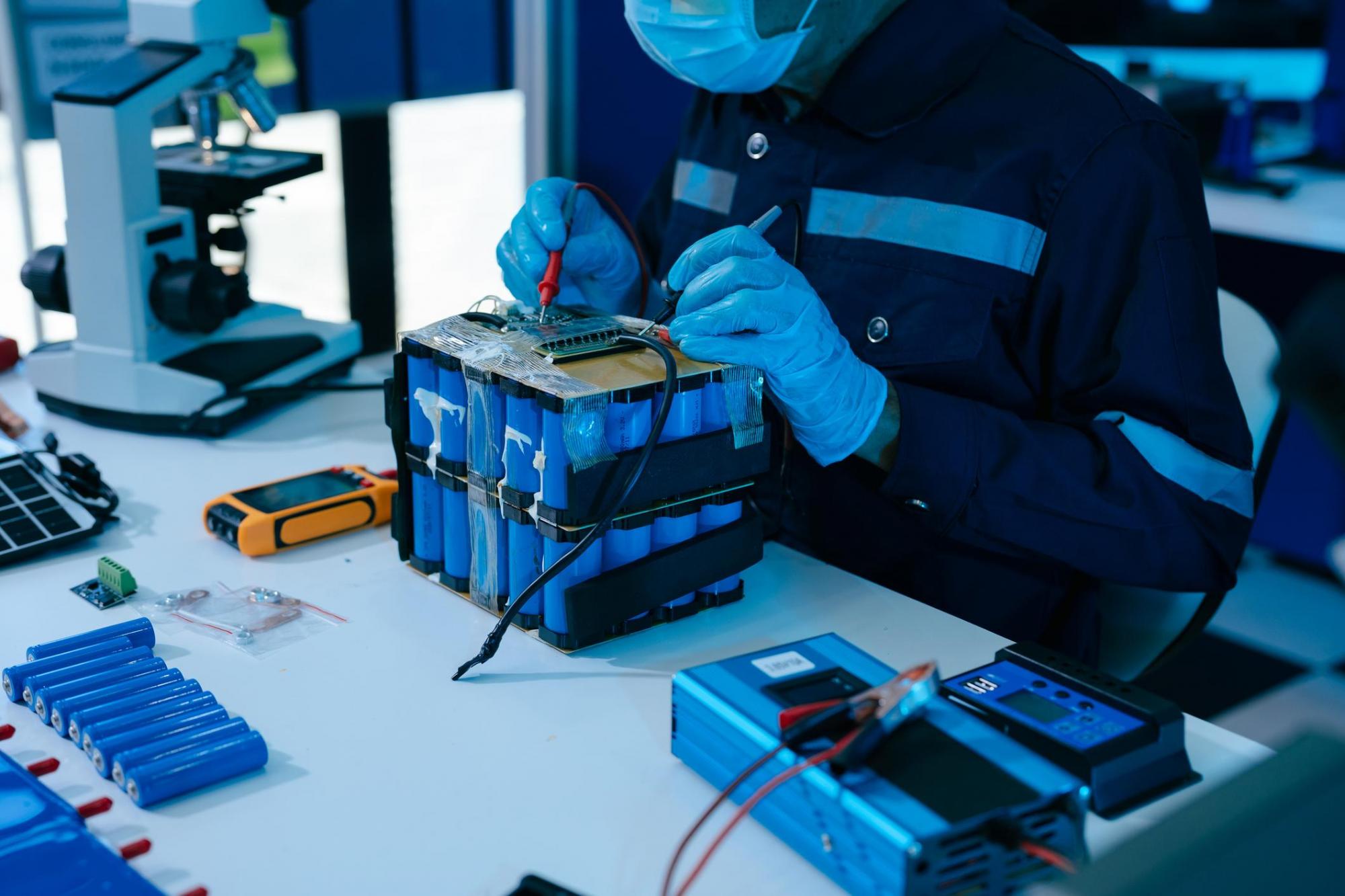
Power tool batteries play an essential role in the performance and reliability of cordless tools. Whether used in construction, woodworking, manufacturing, or industrial maintenance, a reliable battery helps improve work efficiency and reduce downtime.
However, improper charging, unsuitable storage conditions, and excessive workloads can shorten battery life. Choosing the right battery technology is equally important.
Two common rechargeable battery technologies used in power tools are Lithium-ion (Li-ion) and Nickel-Metal Hydride (Ni-MH). Each has different characteristics, advantages, and maintenance requirements.
In this guide, we will explain how to extend the service life of power tool batteries and compare Li-ion vs. Ni-MH batteries to help businesses and professional users make informed decisions. For an overview of the packs we supply, see our Power Tool Batteries range.
Before learning how to maintain a battery, it is important to understand its chemistry.
Lithium-ion batteries are widely used in modern cordless power tools because of their high energy density, lightweight design, and excellent performance.
Key advantages include:
High energy density and longer runtime.
Lightweight and compact construction.
Low self-discharge rate.
No memory effect under normal use.
Suitable for high-performance cordless tools.
Li-ion batteries are commonly used in cordless drills, impact drivers, saws, grinders, and other professional power tools.
Ni-MH batteries have been used in rechargeable power tools for many years. They remain a practical replacement option for certain older cordless tools and equipment.
Key advantages include:
Reliable rechargeable performance.
Suitable for many legacy power tool models.
Durable battery construction.
Available in various voltage and capacity configurations.
A practical solution for replacement battery packs.
Ni-MH batteries are commonly found in older cordless drills, screwdrivers, and other rechargeable power tools.
Proper battery maintenance can help reduce premature degradation and improve long-term performance. Here are seven practical tips.
Always use a charger designed for your battery chemistry, voltage, and charging specifications.
Li-ion and Ni-MH batteries require different charging control methods. Using an incompatible charger may cause overheating, poor charging performance, or battery damage.
For Li-ion batteries, use a charger with appropriate voltage control and charging protection.
For Ni-MH batteries, use a compatible charging system designed for Ni-MH chemistry.
Temperature has a significant impact on rechargeable battery performance and service life.
High temperatures can accelerate battery aging, while extremely low temperatures may temporarily reduce available capacity and power output.
Recommended practices:
Avoid leaving batteries inside hot vehicles.
Keep batteries away from direct sunlight.
Do not charge batteries in excessively hot environments.
Allow overheated batteries to cool before charging.
Follow the manufacturer's specified operating and charging temperature ranges.
Proper temperature management is especially important for batteries used in construction sites and industrial environments.
Repeatedly draining a battery until the power tool stops working can contribute to unnecessary battery stress.
For Li-ion batteries, avoid prolonged storage in a fully discharged condition. Recharge the battery according to the manufacturer's recommendations.
For Ni-MH batteries, avoid unnecessary deep discharge and follow the recommended charging procedure.
Using a battery with appropriate low-voltage protection can also help reduce the risk of over-discharge.
When power tools are not used for extended periods, proper battery storage is essential.
Consider the following recommendations:
Store batteries in a cool, dry environment.
Keep batteries away from moisture and direct sunlight.
Avoid storing batteries near heat sources.
Follow the recommended storage charge level for the battery chemistry.
Inspect stored batteries periodically.
For long-term Li-ion storage, a partial state of charge is generally preferable to keeping the battery fully charged or completely discharged.
Using a power tool beyond its designed workload can increase battery temperature and current demand.
For example, drilling through hard materials with an unsuitable drill bit or continuously operating a tool under excessive load can cause higher battery stress.
To reduce unnecessary battery wear:
Select the correct tool for the application.
Use suitable accessories and attachments.
Avoid continuous operation beyond the tool's rated capability.
Allow the battery to cool during demanding applications.
Dust, dirt, and oxidation on battery contacts can increase electrical resistance and affect power delivery.
Regularly inspect the battery terminals and clean them using a dry, soft cloth.
Good electrical contact helps maintain stable power transmission between the battery and the tool.
When replacing an old battery, selecting a compatible and well-manufactured battery pack is important.
Check the following specifications before purchasing:
Battery voltage.
Nominal capacity (mAh or Ah).
Battery chemistry.
Physical dimensions.
Connector and terminal configuration.
Charging compatibility.
Protection circuit design.
A properly designed replacement battery pack helps ensure reliable performance and reduces compatibility problems.
Although both technologies are rechargeable, Li-ion and Ni-MH batteries have different performance characteristics.
| Comparison | Li-ion Battery | Ni-MH Battery |
|---|---|---|
| Energy density | Higher | Lower |
| Weight | Lighter | Generally heavier |
| Self-discharge | Lower | Generally higher |
| Memory effect | No significant memory effect | Some voltage depression may occur |
| Charging | Dedicated Li-ion charging control | Dedicated Ni-MH charging control |
| Maintenance | Relatively low | Requires suitable charging practices |
| Application | Modern cordless tools | Legacy and replacement tools |
Li-ion batteries generally offer better energy density and a lighter design, making them suitable for modern cordless power tools that require longer runtime and higher portability.
Ni-MH batteries remain useful for older power tool models where the original battery chemistry and charger are designed for Ni-MH technology.
The best option depends on the tool's original design, electrical requirements, and intended application.
Even with proper maintenance, rechargeable batteries gradually lose capacity over time.
Here are some common signs that a power tool battery may need replacement:
The battery runs out of power much faster than it did when new.
The battery takes unusually long to charge or cannot complete a normal charging cycle.
The power tool suddenly stops working even when the battery indicator shows remaining capacity.
The battery becomes unusually hot during normal charging or operation.
Swelling, cracks, leakage, or damaged terminals indicate that the battery should no longer be used.
For professional users, equipment repair companies, distributors, and industrial buyers, choosing the right replacement battery involves more than comparing capacity.
Consider these important factors:
The replacement battery must match the voltage requirements of the original power tool. Using an incorrect voltage may damage the equipment.
Capacity determines how much energy a battery can store.
Higher-capacity batteries may provide longer operating time, provided that the battery dimensions, electrical design, and tool compatibility are suitable.
Check whether the original equipment uses Li-ion or Ni-MH technology. Do not assume that different battery chemistries are interchangeable.
The enclosure, connectors, terminals, and internal protection system must be compatible with the power tool.
For B2B purchasers, a reliable battery manufacturer should provide stable production quality, technical support, product customization, and consistent specifications.
Enpower specializes in rechargeable battery pack manufacturing, providing battery solutions for different industrial and commercial applications.
We support customized battery pack development based on customer requirements, including:
Li-ion battery packs.
Ni-MH battery packs.
Customized voltage and capacity.
Battery pack dimensions and structural design.
Connector and terminal customization.
Protection circuit solutions.
OEM and replacement battery manufacturing.
Whether you need a replacement battery for an existing cordless drill or a customized rechargeable battery pack for specialized equipment, our team can help evaluate your technical requirements.
Our manufacturing approach focuses on product consistency, reliable battery performance, and customized solutions for different applications.
Q1: How long should a power tool battery last?
Battery life depends on battery chemistry, charging habits, operating conditions, and usage frequency. Proper maintenance and suitable storage can help extend its service life.
Q2: Is it better to leave a power tool battery fully charged?
Not necessarily. For long-term storage, Li-ion batteries generally benefit from being stored at a partial state of charge rather than remaining fully charged. Always follow the battery manufacturer's storage recommendations.
Q3: Can I use a Li-ion battery instead of a Ni-MH battery?
Not automatically. Different battery chemistries have different voltage characteristics and charging requirements. Any conversion requires checking the tool's electrical design, charger compatibility, battery management system, and physical configuration.
Q4: Does a higher mAh rating mean a better power tool battery?
Not always. A higher capacity can provide longer runtime, but voltage, discharge capability, battery quality, and tool compatibility are equally important.
Q5: Which is better for cordless drills, Li-ion or Ni-MH?
Li-ion is generally better for modern cordless drills because of its higher energy density and lighter weight. Ni-MH remains a suitable option for compatible older drill models.
Q6: Can Enpower manufacture customized power tool battery packs?
Yes. Enpower provides customized Li-ion and Ni-MH battery pack solutions based on voltage, capacity, dimensions, connector requirements, and application specifications.
Extending the life of a power tool battery requires proper charging, suitable storage, temperature management, and appropriate usage.
Li-ion batteries are generally preferred for modern cordless power tools because of their lightweight design and high energy density. However, Ni-MH batteries continue to play an important role in replacement applications and older equipment.
Choosing the right battery technology and working with a reliable battery manufacturer can help improve equipment performance and reduce replacement costs.
Visit our website: https://www.enpowertec.com/
Contact our team for OEM/ODM battery manufacturing and customized battery solutions.

Enpower integrates R&D, production and quality testing in-house, supporting custom battery solutions for worldwide buyers.