
📞 Tel:+86-750-3857665
Email:sales@enpowertec.com
Email:sales@enpowertec.com
Cordless power tools are widely used in construction, woodworking, home improvement, and industrial maintenance. However, after extended use, rechargeable batteries gradually lose capacity and runtime, making replacement necessary.
For users of older Makita cordless drills, finding a reliable replacement battery is an important part of maintaining tool performance.
The Makita 1420 3000mAh replacement battery is a battery replacement option for compatible Makita power tools. With a 3000mAh capacity, it is designed to provide rechargeable power for everyday drilling and fastening applications.
In this guide, we will introduce the Makita 1420 battery, explain its specifications, discuss compatibility considerations, and provide practical tips for choosing the right replacement battery. For an overview of the packs we supply, see our Power Tool Batteries range.
The Makita 1420 is associated with older Makita cordless power tool battery systems. When the original battery no longer provides sufficient runtime, users may consider a compatible replacement battery.
A 3000mAh replacement battery has a nominal capacity of 3.0Ah, indicating its ability to store electrical energy.
However, battery capacity alone does not determine whether a replacement is suitable. Buyers should also check the battery chemistry, nominal voltage, dimensions, terminal design, and charger compatibility.
Important battery specifications to verify:
Makita 1420
3000mAh (3.0Ah)
Confirm against the specific battery version
Confirm against the original battery label
Compatible Makita Cordless Drills
Designed for repeated charge and discharge cycles
Compatible aftermarket battery
Battery capacity is one of the most important factors affecting cordless drill runtime.
A 3000mAh battery provides a nominal capacity of 3.0Ah. Compared with a lower-capacity battery using the same chemistry and voltage, it may offer longer operating time under comparable conditions.
A higher-capacity battery can store more energy, potentially allowing users to complete more drilling and fastening tasks between charging cycles.
Actual runtime depends on several factors:
Drill motor power
Workload and drilling material
Battery condition
Operating temperature
Battery discharge characteristics
A replacement battery is useful for contractors, maintenance technicians, workshops, and DIY users who want to continue using their existing cordless drills.
It can help reduce interruptions caused by batteries that no longer hold sufficient charge.
Replacing an aging battery can be more economical than purchasing an entirely new cordless drill system, provided that the original tool remains in good working condition.
For businesses managing multiple power tools, replacement batteries can also simplify spare-parts management.
Before purchasing a Makita 1420 replacement battery, it is important to verify compatibility carefully.
Not every battery advertised as a Makita replacement will fit or operate correctly with every Makita drill.
Here are five factors to check.
Check the model number printed on the original battery label.
Make sure the replacement is specifically designed for the Makita 1420 battery system rather than relying only on the tool brand or physical appearance.
The replacement battery should match the electrical requirements of the original power tool.
Using an incompatible voltage may affect tool operation and could cause damage.
Do not assume that batteries with similar model numbers have identical voltage specifications.
Battery chemistry is especially important when replacing older power tool batteries.
Different battery technologies include:
Nickel-Cadmium (Ni-Cd)
Nickel-Metal Hydride (Ni-MH)
Lithium-Ion (Li-ion)
Each chemistry has different charging characteristics and electrical requirements.
A replacement battery must be compatible with the tool and its charging system. A change in battery chemistry may require additional compatibility checks or a different charger.
Even if voltage and capacity are correct, the battery must physically fit the drill.
Check:
Battery housing dimensions
Terminal positions
Connector configuration
Locking mechanism
Contact polarity
Incorrect dimensions or terminal layouts may prevent installation or create electrical connection problems.
Always verify whether the existing charger supports the replacement battery's chemistry and voltage.
For example, a charger designed for Ni-MH batteries should not automatically be assumed to support Li-ion batteries.
When searching for an older Makita replacement battery, buyers may encounter both Ni-MH and lithium-ion products.
Understanding their differences helps prevent compatibility problems.
| Feature | Ni-MH Battery | Li-ion Battery |
|---|---|---|
| Cell Nominal Voltage | 1.2V | 3.6V-3.7V |
| Energy Density | Generally lower | Generally higher |
| Weight | Generally heavier | Generally lighter |
| Self-Discharge | Generally higher | Generally lower |
| Charging Requirements | Ni-MH charger | Li-ion compatible charger |
| Common Applications | Older power tools | Modern power tools |
Which replacement should you choose?
If your original Makita 1420 battery is a Ni-MH model, a compatible Ni-MH replacement may be the most straightforward option.
If considering a lithium-ion conversion, you must first verify the tool's electrical design, battery connection, charging system, and protection requirements.
Proper battery maintenance can help improve long-term performance.
Here are several practical recommendations.
Always use a charger designed for the specific battery chemistry and voltage.
High temperatures accelerate battery aging. Do not leave batteries in direct sunlight, hot vehicles, or near heat sources, and allow the battery to cool down after heavy use before recharging.
Recharge the battery before it is completely empty whenever possible. Frequently draining a Ni-MH pack to zero can shorten its cycle life.
Store batteries in a cool, dry place away from moisture and metal objects. For long-term storage, charge the battery partially and recharge it every few months.
Wipe the battery terminals and tool contacts with a dry cloth from time to time. Dirt or oxidation on the contacts can cause power loss and poor connections.
If a battery swells, leaks, overheats, or loses runtime significantly, stop using it and replace it with a compatible new pack.
For distributors, wholesalers, power tool brands, and equipment repair companies, finding a reliable battery manufacturer is essential when sourcing Makita replacement batteries.
A professional battery supplier should provide:
Different tools may require different battery configurations, housing designs, and connector structures. OEM and customized manufacturing capabilities help meet specific equipment requirements.
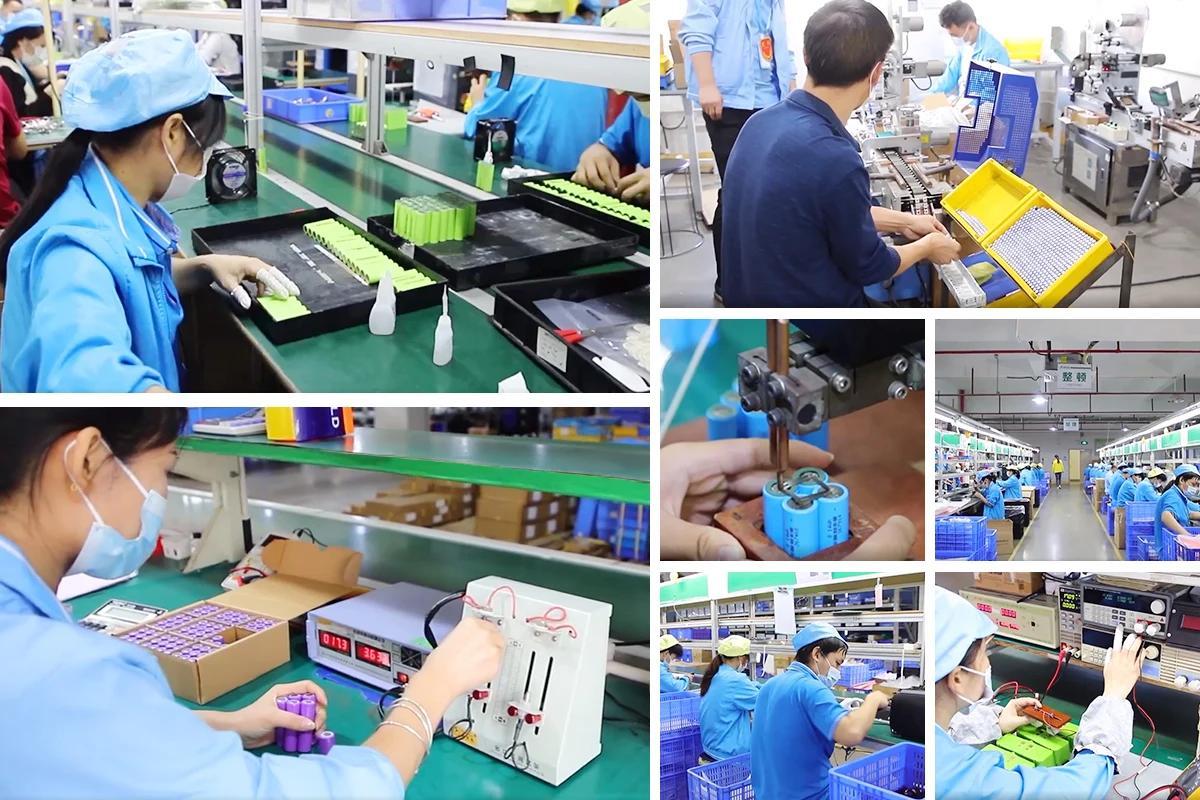
Reliable manufacturers implement voltage checks, capacity testing, charge and discharge tests, and safety inspections before shipment.
For international buyers, CE, RoHS, and battery regulation documentation are important for smooth import and market access.
Consistent manufacturing processes support repeat orders and stable long-term supply for B2B customers.
A professional supplier should help customers confirm specifications, compatibility requirements, and suitable replacement solutions.
Enpower Technology Co., Ltd. specializes in rechargeable battery pack manufacturing and customized battery solutions for industrial and commercial applications.
Our product range includes:
We support customized battery solutions based on customer requirements, including voltage, capacity, cell configuration, battery dimensions, connectors, and housing design.
Whether you need a Makita 1420 compatible replacement battery in standard or high capacity, or customized packs for your own equipment, Enpower can help evaluate your requirements and develop a suitable solution.
3000mAh is the nominal capacity of the battery, equal to 3.0Ah. It indicates how much electrical energy the battery can store and is one of the factors that determine runtime.
Yes, if the voltage, chemistry, dimensions, terminals, and charger compatibility all match. Higher capacity generally provides longer runtime, but compatibility must always be confirmed first.
No, provided the replacement battery is compatible. The drill draws the current it needs, while capacity mainly affects how long the battery can supply power between charges.
Check the original battery model number, voltage, chemistry, dimensions, terminal layout, and charger type, then compare these details with the replacement battery specifications before ordering.
Yes. Enpower provides customized rechargeable battery pack solutions, including capacity, cell configuration, dimensions, connectors, and housing design, based on customer requirements.
The Makita 1420 3000mAh replacement battery is a practical option for users who want to restore the runtime of older Makita cordless power tools. Before ordering, always confirm the model number, voltage, chemistry, physical fit, and charger compatibility.
For distributors, wholesalers, and power tool brands, working with an experienced battery pack manufacturer helps ensure consistent quality, reliable certification, and stable long-term supply.
Visit our website: https://www.enpowertec.com/
Contact our team for OEM/ODM battery manufacturing and customized battery solutions.

Enpower integrates R&D, production and quality testing in-house, supporting custom battery solutions for worldwide buyers.