
📞 Tel:+86-750-3857665
Email:sales@enpowertec.com
Email:sales@enpowertec.com
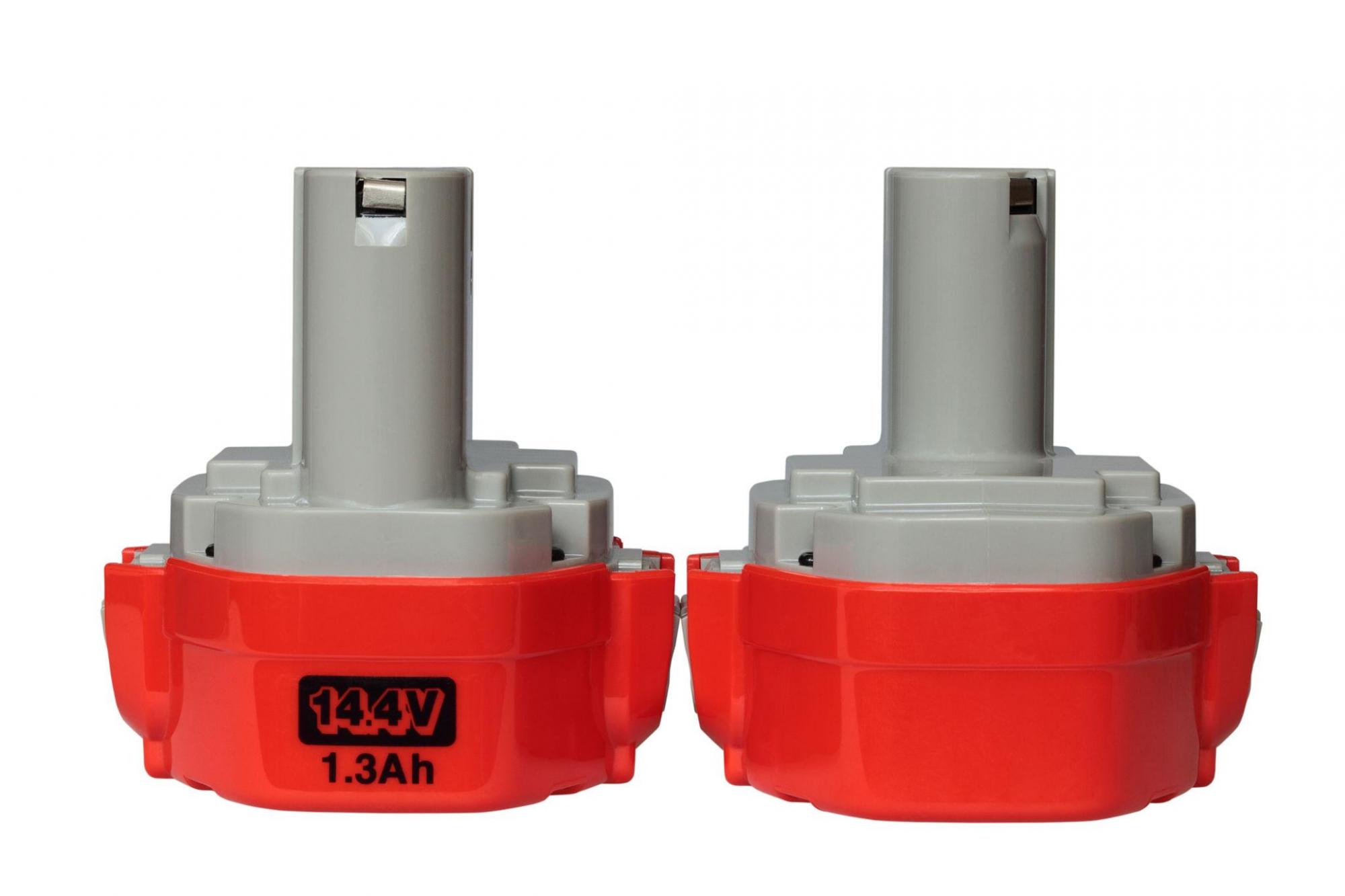
If you own an older Makita cordless power tool, you may come across two battery model numbers when searching for a replacement: Makita 1420 and Makita PA14.
Both batteries are designed for 14.4V Makita cordless power tools, and they share several specifications. However, they have different model numbers and part numbers, which can make choosing the right replacement confusing.
Are Makita 1420 and PA14 interchangeable? Do they have the same capacity? Can you use a PA14 battery instead of a 1420?
In this guide, we compare the Makita 1420 vs PA14 battery, covering voltage, capacity, battery chemistry, compatibility, and replacement options to help you make the right choice. For an overview of the models we supply, see our Power Tool Batteries range.
The Makita 1420 and PA14 are both 14.4V Ni-Cd rechargeable battery packs with a nominal capacity of 1.3Ah.
Here is a quick comparison of their specifications:
| Specification | Makita 1420 | Makita PA14 |
|---|---|---|
| Battery Model | 1420 | PA14 |
| Voltage | 14.4V | 14.4V |
| Capacity | 1.3Ah | 1.3Ah |
| Battery Chemistry | Ni-Cd | Ni-Cd |
| Battery Style | Pod-style | Pod-style |
| Part Number | 193062-6 | 193987-4 |
| Application | Cordless power tools | Cordless power tools |
Both models belong to Makita's older 14.4V battery platform.
Although their specifications are similar, the model numbers and part numbers are different. Buyers should verify the battery housing, terminal configuration, and tool compatibility before ordering.
The Makita 1420 is a 14.4V nickel-cadmium (Ni-Cd) rechargeable battery designed for older Makita cordless power tools.
Its compact pod-style design allows it to slide into compatible battery compartments.
Key specifications include:
Makita 1420
14.4V
1.3Ah
Nickel-Cadmium (Ni-Cd)
193062-6
The battery was used with several Makita cordless drills and other portable power tools.
For users whose original 1420 battery has lost capacity, a compatible replacement battery can help restore the operating time of the equipment.
The Makita PA14 is another 14.4V rechargeable Ni-Cd battery pack.
It shares the same nominal voltage and capacity as the original Makita 1420.
Key specifications include:
Makita PA14
14.4V
1.3Ah
Nickel-Cadmium (Ni-Cd)
193987-4
The PA14 is designed for compatible Makita cordless power tools that use the corresponding 14.4V pod-style battery system.
When purchasing a PA14 replacement, check the original battery label and the tool manufacturer's compatibility information.
This is one of the most common questions among Makita battery users.
The short answer is that both batteries belong to the same 14.4V pod-style battery platform, and Makita documentation lists both as optional battery models for certain compatible tools.
For example, Makita's 6281D cordless drill technical documentation lists both the 1420 and PA14 as compatible battery options.
However, this does not mean every Makita tool using a 1420 battery will automatically accept every PA14 replacement.
Before purchasing, check these four factors:
Since the original Makita 1420 and PA14 both have a nominal capacity of 1.3Ah, neither has an inherent runtime advantage based on its original specifications.
Their performance depends more on battery condition, cell quality, and operating conditions than on the model number.
Both original batteries provide approximately the same nominal energy:
This means their rated energy capacity is approximately 18.72Wh.
Actual operating time depends on the power consumption of the cordless tool, workload, battery age, and operating temperature.
Both original batteries use Ni-Cd chemistry.
However, charging time depends on the charger model and its output specifications.
Always use a charger approved for the battery.
Battery service life depends on charging habits, storage conditions, temperature, and usage frequency.
Old Ni-Cd batteries may gradually lose capacity after repeated charging and discharging cycles.
Replacing an aged battery with a properly manufactured compatible replacement can help restore equipment usability.
Many users want longer operating time without frequently changing batteries.
One option is to consider a compatible higher-capacity replacement battery.
For example:
| Battery Capacity | Nominal Energy at 14.4V |
|---|---|
| 1.3Ah | 18.72Wh |
| 2.0Ah | 28.8Wh |
| 2.6Ah | 37.44Wh |
| 3.0Ah | 43.2Wh |
A higher-capacity battery generally provides longer operating time under comparable conditions.
However, buyers should consider:
Battery chemistry compatibility
Charger compatibility
Housing dimensions
Electrical terminal design
Discharge current requirements
Battery quality and protection design
For example, a compatible Ni-MH replacement may offer higher capacity than the original Ni-Cd battery.
Not as a direct replacement unless the battery system is specifically engineered for the tool.
Lithium-ion batteries have different charging requirements and require an appropriate battery management system.
A proper conversion may involve changes to the battery pack design, protection circuitry, charging system, and electrical interface.
Always use a compatible battery and charging system.
When searching for a Makita 1420 or PA14 replacement battery, consider the following purchasing factors.
Check whether your original battery is marked 1420 or PA14. This is the first step in identifying the correct replacement.
Confirm the original battery voltage and choose a replacement designed for the equipment's electrical requirements.
Check whether your equipment and charger support Ni-Cd, Ni-MH, or another battery chemistry.
Compare the battery dimensions, housing shape, terminals, and locking structure.
Choose a replacement battery manufacturer that provides reliable battery cells, consistent manufacturing processes, and appropriate quality inspections.
Enpower Technology specializes in rechargeable battery pack manufacturing and customized battery solutions for different industrial and commercial applications.
We understand that replacement battery requirements vary according to equipment models, electrical specifications, and operating environments.
Our battery customization capabilities include:
Li-ion, LiFePO4, and Ni-MH battery solutions
Customized voltage and capacity
Battery pack structural design
Customized connectors and electrical terminals
Continuous and peak discharge current optimization
Overcharge and over-discharge protection
Over-current and short-circuit protection
NTC temperature monitoring
Sample development and laboratory testing
We support battery distributors, equipment manufacturers, wholesalers, and industrial buyers looking for customized rechargeable battery packs.
Whether you need a replacement power tool battery or an OEM battery pack for your own equipment, Enpower can help evaluate your requirements and develop a suitable battery solution.
They are different battery models with different part numbers, but both are 14.4V, 1.3Ah Ni-Cd pod-style batteries. Makita documentation lists both for certain compatible tools.
Potentially, if your specific power tool supports both battery models and the replacement has the correct housing and electrical interface. Always verify compatibility before purchasing.
The Makita 1420 has a nominal voltage of 14.4V.
The original PA14 battery has a nominal capacity of 1.3Ah.
Yes, compatible higher-capacity replacement options may be available. Check battery chemistry, charging compatibility, dimensions, and electrical specifications before upgrading.
No. The original 1420 and PA14 models are nickel-cadmium (Ni-Cd) batteries, not lithium-ion batteries.
Check the model number and part number on the original battery label, then compare the voltage, chemistry, dimensions, and terminal configuration with the replacement product.
The Makita 1420 and PA14 are two closely related 14.4V Ni-Cd battery models designed for compatible Makita cordless power tools.
Both have a nominal capacity of 1.3Ah and similar pod-style designs, but they carry different model and part numbers.
For users looking for a replacement battery, the most important factors are voltage, battery chemistry, physical compatibility, and charger requirements.
For battery distributors, wholesalers, and equipment manufacturers, working with a professional battery pack manufacturer can provide more flexible replacement and customization options.
Visit our website: https://www.enpowertec.com/
Contact our team for OEM/ODM battery manufacturing and customized battery solutions.

Enpower integrates R&D, production and quality testing in-house, supporting custom battery solutions for worldwide buyers.