
📞 Tel:+86-750-3857665
Email:sales@enpowertec.com
Email:sales@enpowertec.com
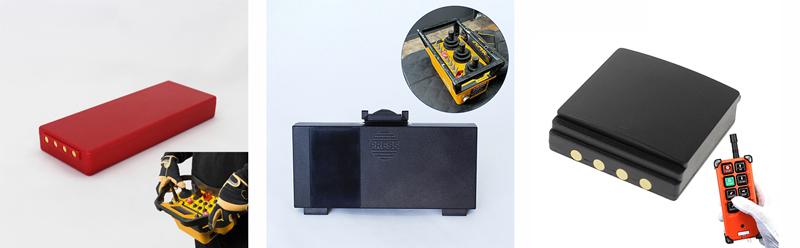
Crane remote control systems are widely used in manufacturing plants, construction sites, warehouses, forestry operations, and material handling facilities. These systems allow operators to control cranes and other industrial equipment remotely, helping improve operational flexibility and workplace efficiency.
However, reliable remote control operation depends on selecting the right battery. An unsuitable battery may cause short operating times, charging problems, compatibility issues, or unexpected equipment downtime.
For industrial equipment operators, maintenance teams, battery distributors, and purchasing managers, choosing the right crane remote control battery requires more than matching voltage and capacity. Battery chemistry, connector design, charging requirements, operating conditions, and product quality must also be considered.
In this guide, we explain how to select a suitable crane remote control battery for industrial applications and what to check before purchasing a replacement.
The first step in choosing the right crane remote control battery is identifying the exact remote control model.
Different manufacturers and equipment models may use different battery packs, even when the remote controls look similar. Batteries may also vary between generations of the same product series.
Before searching for a replacement battery, collect the following information:
Check the label on the original battery and consult the equipment documentation whenever possible.
If the battery label is missing or damaged, take clear photographs of the battery, connector, and remote control identification plate. A battery supplier may use this information to help identify a potential replacement, although final compatibility should be confirmed before installation.
Crane remote control batteries are available in different rechargeable battery chemistries. The most appropriate option depends on the original equipment specifications and the requirements of the charging system.
Nickel-metal hydride (Ni-MH) batteries are used in various industrial remote control applications, including certain crane and concrete pump remote controls.
Their characteristics include:
Rechargeable battery technology.
Availability in different voltage and capacity configurations.
Compatibility with equipment specifically designed for Ni-MH battery packs.
Charging and storage requirements that depend on the battery design.
Ni-MH replacement batteries can be a practical choice when the original remote control uses this chemistry. Before purchasing, confirm the original battery model, connector, dimensions, voltage, and compatible charging method.
Lithium-ion (Li-ion) batteries offer high energy density and generally low self-discharge, making them suitable for many compact rechargeable battery applications.
Depending on the design, a Li-ion battery pack may provide a compact configuration and sufficient operating time for demanding work schedules.
Any change in battery chemistry must be evaluated against the remote control's electrical requirements, charging system, and protection design.
Some older industrial remote controls may use nickel-cadmium (Ni-Cd) batteries.
If you are replacing a legacy Ni-Cd battery, confirm whether the original chemistry must be retained or whether an approved alternative is available. Ni-Cd batteries also contain cadmium, which is subject to environmental and disposal restrictions in many markets.
| Battery type | General characteristics | Key consideration |
|---|---|---|
| Ni-MH | Rechargeable and used in many industrial battery packs | Confirm the correct charging method and original equipment compatibility. |
| Li-ion | High energy density and generally low self-discharge | Verify the charging system, protection features, and temperature limits. |
| Ni-Cd | Found in some legacy equipment | Confirm compatibility and applicable environmental requirements. |
Voltage and capacity are two essential specifications when selecting a crane remote control battery.
Voltage must meet the requirements of the remote control.
Industrial remote control batteries may use different nominal voltages, depending on the battery chemistry and cell configuration. Examples include 3.6V, 6V, and 7.2V packs, but actual requirements vary by model.
Before ordering, check the nominal voltage on the original battery label or in the equipment documentation.
Battery capacity is usually measured in milliamp-hours (mAh) or amp-hours (Ah). Capacity influences how much electrical charge a battery can store and can affect how long the remote control operates between charges.
When selecting capacity, consider:
Expected daily operating hours.
The remote control's power consumption.
The original battery capacity.
Charging frequency.
Available space inside the battery compartment.
The equipment manufacturer's electrical requirements.
For industrial applications, the goal is to find a battery that meets operating requirements without compromising compatibility or charging safety.
Physical compatibility is just as important as electrical compatibility.
A replacement battery may have the correct voltage and capacity but still be unsuitable because of differences in dimensions, connector design, or terminal arrangement.
Before purchasing a crane remote control battery, check the following.
Measure the original battery's length, width, and height. Confirm that the replacement fits securely into the battery compartment.
Check the connector shape, terminal spacing, and pin arrangement.
Verify positive and negative terminal positions according to the manufacturer's specifications.
Ensure that the battery housing does not interfere with the battery cover, locking mechanism, or installation process.
Some battery packs may incorporate temperature-sensing, identification, or other connections that must be considered.
A suitable charger is essential for maintaining battery performance and safety.
Different battery chemistries use different charging methods. Even batteries with similar voltage ratings may require different charging parameters.
Before selecting a replacement crane remote control battery, confirm:
The original charger model.
The battery chemistry supported by the charger.
The required charging voltage and current.
The connector and terminal configuration.
Any temperature-monitoring or charging-control requirements.
The manufacturer's charging instructions.
Crane remote controls operate in a wide range of environments, including factories, warehouses, construction sites, concrete pumping operations, and outdoor material handling facilities.
These conditions can influence battery performance and service life.
High temperatures can accelerate battery aging, while low temperatures may temporarily reduce available capacity. Select a battery that meets the operating and charging temperature requirements of the application.
Industrial environments may expose equipment to rain, humidity, dust, or other contaminants. Check the protection requirements of the complete remote control system and confirm whether the battery housing is suitable for the intended environment. Do not assume that every industrial battery pack is waterproof or dustproof.
Some crane and mobile equipment applications involve vibration and mechanical movement. The battery housing, contacts, and internal connections should be suitable for the intended operating conditions.
Equipment used throughout long shifts may require a battery with sufficient capacity to support the expected operating time. Consider charging opportunities, spare battery availability, and the number of remote controls used across the site.
Battery quality plays an important role in the reliability of industrial remote control systems.
For B2B buyers, evaluating a battery based solely on price or advertised capacity may overlook important differences in manufacturing quality and application suitability.
When evaluating a replacement battery, consider the following factors:
Cell quality and consistency.
Assembly workmanship and electrical connections.
Insulation and housing quality.
Appropriate protection features.
Electrical inspection and final testing.
Product traceability and warranty terms.
Technical support and after-sales service.
Depending on the battery chemistry and design, protection features may include:
Correct maintenance can help reduce premature battery aging and support reliable operation.
Follow these practical recommendations:
Always use a charger approved for the battery model and chemistry.
In particular, do not routinely leave Li-ion batteries fully discharged for extended periods.
Keep batteries in a suitable environment and follow the manufacturer's recommended storage charge and temperature limits.
Dirt, corrosion, and moisture can interfere with electrical connections.
Follow the specified operating and charging temperature ranges.
Watch for reduced operating time, charging problems, physical damage, or unusual heating.
Industrial buyers may choose between an original equipment manufacturer (OEM) battery and a compatible replacement battery.
Both options can be suitable, depending on the application and the quality of the available products.
| Factor | OEM battery | Compatible replacement battery |
|---|---|---|
| Compatibility | Designed for specified equipment | Must be verified against original requirements |
| Product selection | Depends on the OEM's available models | May offer additional sourcing options |
| Customization | Depends on the manufacturer's product range | May be available from specialist battery suppliers |
| Purchasing options | Depend on the authorized supply channel | Depend on supplier capabilities and order requirements |
| Evaluation priorities | Original specifications and support | Compatibility, quality, testing, warranty, and total cost |
Before ordering, confirm its electrical specifications, dimensions, connector, charging requirements, and intended application.
For industrial battery distributors and maintenance companies, supplier consistency, product availability, warranty terms, and technical support can also influence long-term purchasing decisions.
Providing accurate technical information helps a battery manufacturer evaluate your requirements and identify the appropriate replacement solution.
Before requesting a quotation, prepare the following information:
| Required information | Purpose |
|---|---|
| Remote control brand and model | Identifies the equipment application |
| Original battery model | Helps identify the intended replacement |
| Nominal voltage | Confirms electrical requirements |
| Rated capacity | Helps determine expected operating time |
| Battery chemistry | Establishes charging and compatibility requirements |
| Dimensions | Confirms physical fit |
| Connector photographs | Helps verify the terminal configuration |
| Charger model | Supports charging compatibility checks |
| Order quantity | Helps the supplier prepare a quotation |
| Special requirements | Identifies customization and environmental needs |
If you do not know the original battery model, clear photographs of the battery label, connector, and remote control identification plate may help.
Enpower Technology specializes in industrial battery solutions, including replacement batteries for crane remote controls and other industrial equipment.
For distributors, equipment maintenance companies, industrial purchasing teams, and OEM customers, finding the right battery involves more than matching voltage and capacity. Connector configuration, charging requirements, battery dimensions, and working conditions must also be considered.
Enpower can review customer requirements for suitable replacement and customized industrial battery solutions, subject to technical evaluation.
Our industrial battery solutions may be evaluated according to application requirements such as:
For compatibility review, the following product pages can be used as starting points:
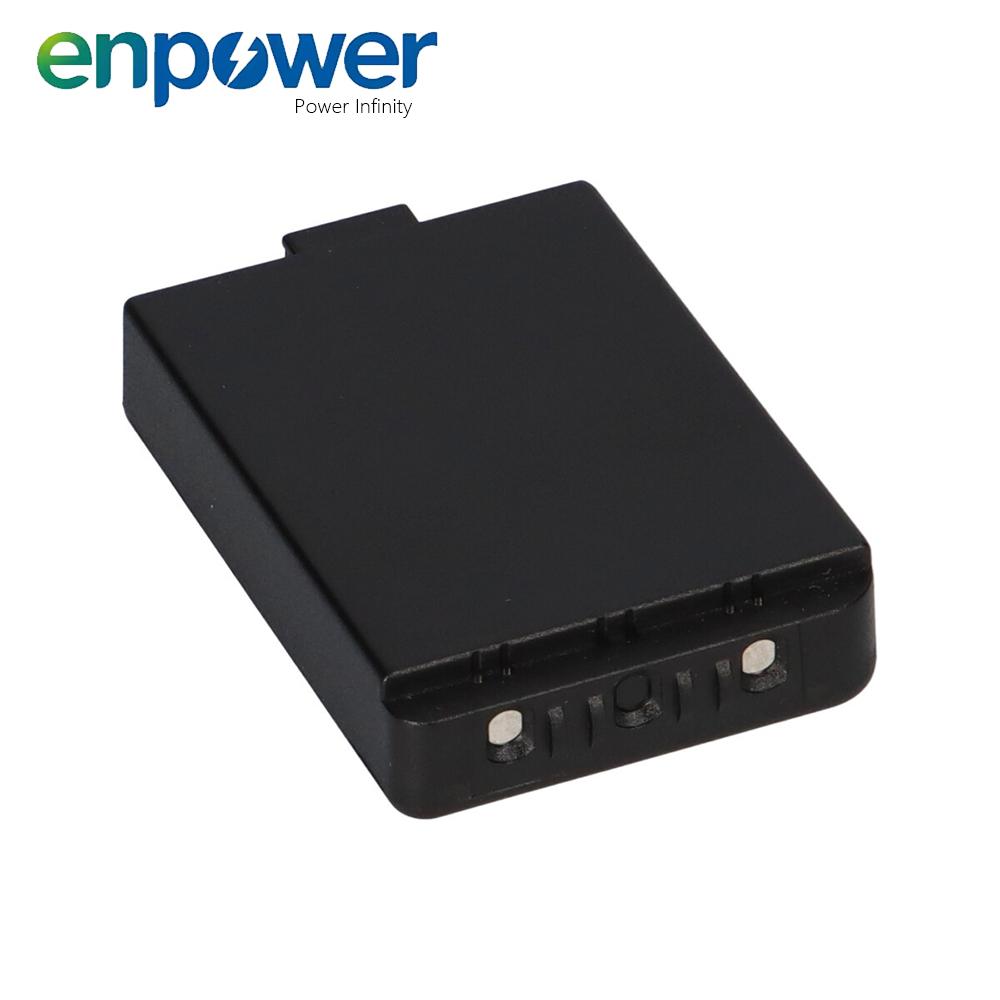
Crane Remote Control Battery.
View Crane Remote Control Battery
Concrete Pump Remote Control Battery.
View Concrete Pump Remote Control Battery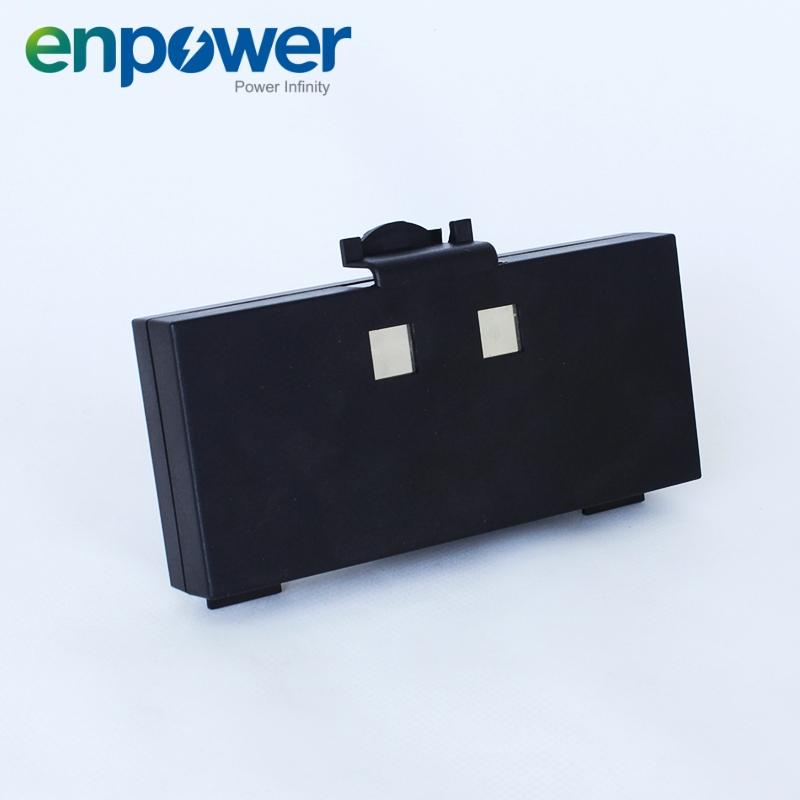
Crane Remote Control Battery.
View Crane Remote Control BatteryTo help us evaluate your application, provide the original battery model number, remote control model, battery specifications, and connector photographs whenever possible.
Start by identifying the remote control model and original battery part number. Then confirm voltage, capacity, chemistry, dimensions, connector configuration, and charger compatibility.
Potentially, if the replacement is compatible with the remote control and charging system. Check the battery dimensions and electrical requirements before choosing a higher-capacity option.
Only when the replacement has been verified as suitable for the specific application. Battery chemistry, voltage characteristics, charging requirements, protection features, and physical configuration must all be considered.
Service life depends on battery chemistry, product quality, operating frequency, charging habits, temperature, and storage conditions. Follow the manufacturer's maintenance recommendations and replace batteries when they no longer provide reliable operation.
Common signs include reduced operating time, frequent low-battery warnings, charging problems, unexpected shutdowns, and physical damage. However, faulty chargers or damaged contacts can cause similar symptoms and should also be considered.
Enpower can review requirements for industrial battery solutions and assess customization needs according to the application. Feasibility depends on the required specifications, compatibility, and project evaluation.
Choosing the right crane remote control battery for industrial applications requires careful consideration of battery chemistry, voltage, capacity, dimensions, connectors, charger compatibility, and working conditions.
By confirming these specifications before purchasing, industrial buyers can reduce compatibility problems, improve maintenance planning, and support reliable equipment operation.
Whether you need a standard replacement battery or a customized industrial battery pack, working with an experienced supplier can simplify the sourcing process.

Enpower integrates R&D, production and quality testing in-house, supporting custom battery solutions for worldwide buyers.