
📞 Tel:+86-750-3857665
Email:sales@enpowertec.com
Email:sales@enpowertec.com
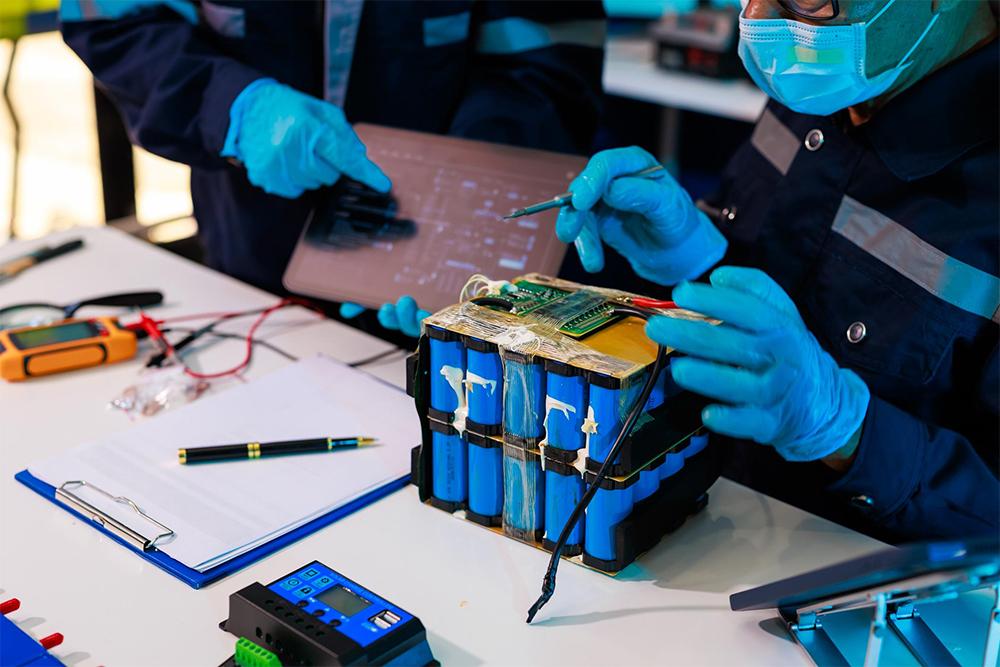
Choosing a reliable two way radio battery manufacturer is essential for businesses that depend on professional radio communication. Whether you supply communication equipment, manage a fleet of security radios, operate a repair service, or distribute radio accessories, the quality of your batteries directly affects equipment performance, operational efficiency, and customer satisfaction.
However, with so many battery suppliers available, how can you identify a manufacturer that offers consistent quality, competitive pricing, and dependable long-term support?
In this guide, we will explain the key factors to consider when selecting a two way radio battery manufacturer and how to find the right supplier for your business.
Experience is an important factor when evaluating a two way radio battery supplier. A manufacturer with relevant industry experience is more likely to understand the technical requirements of professional communication equipment.
Before choosing a supplier, consider the following questions:
A specialized battery manufacturer can help you identify suitable battery solutions based on your equipment specifications, operating environment, and purchasing requirements.
Battery quality is one of the most important considerations when choosing a two way radio battery manufacturer. Unreliable batteries may cause short operating times, unexpected power loss, charging problems, or premature replacement.
A professional supplier should have a clear quality control process covering raw materials, cell selection, battery pack assembly, and finished product testing.
Important factors to evaluate include:
Ask about cell specifications, capacity consistency, and supplier traceability.
Depending on the battery chemistry and design, protection functions may include overcharge, over-discharge, overcurrent, short-circuit, and temperature protection.
Verify that the actual battery capacity and operating performance meet the agreed specifications.
Confirm that production batches are checked against established quality requirements.
Request applicable test reports and compliance documents for the intended market and product configuration.
For lithium-ion battery packs, relevant transportation and product safety requirements should also be reviewed.
Compatibility is a major concern for buyers purchasing replacement two way radio batteries.
Even when two batteries look similar, they may differ in voltage, dimensions, connector design, contact position, charging requirements, or electronic communication functions.
Before placing an order, provide the manufacturer with as much of the following information as possible:
A reliable manufacturer should review these specifications before confirming compatibility.
For new or customized products, requesting samples for fit, charging, and performance verification can help reduce purchasing risks before mass production.
Not every business needs a standard replacement battery. Some distributors, equipment manufacturers, and communication system integrators require customized battery packs to meet specific product or application requirements.
When evaluating a two way radio battery manufacturer, check whether it can support customization in areas such as:
A manufacturer with in-house engineering and production capabilities can help turn equipment requirements into a practical battery solution.
For example, a customer may need a compact battery pack for portable communication equipment or a higher-capacity solution for longer operating periods. The manufacturer should evaluate the electrical, mechanical, thermal, and charging requirements before recommending a design.
Custom battery development should include technical confirmation, sample production, testing, and approval before mass manufacturing.
Price matters in B2B purchasing, but the lowest quotation does not always represent the best value.
When comparing two way radio battery manufacturers, consider the total cost of purchasing and using the batteries, including:
Unit price at different order quantities
Minimum order quantity (MOQ)
Sample and customization costs
Packaging and labeling costs
Shipping and applicable import expenses
Expected service life and replacement frequency
Warranty terms and after-sales support
Buying directly from a battery factory may offer advantages in pricing transparency, customization flexibility, and communication efficiency.
However, buyers should compare quotations based on equivalent specifications. Differences in battery cells, capacity, protection design, testing procedures, and warranty coverage can significantly affect the actual value of a product.
For distributors and wholesalers, a supplier's ability to maintain consistent quality and delivery schedules is just as important as the product itself.
Before establishing a long-term relationship, ask about the manufacturer's production process and quality management practices.
Useful questions include:
A dependable manufacturer should be able to explain its production workflow and provide relevant documentation when requested.
If you import two way radio batteries into the United States, Germany, Australia, or other international markets, verify that the manufacturer can support the documentation required for your products and shipments.
Depending on the battery chemistry, configuration, and destination, relevant documentation may include:
Do not assume that every battery requires the same certificates or that a supplier's general certification automatically covers every model.
Ask for documentation applicable to the specific battery model and confirm the requirements with your importer, carrier, and relevant regulatory authorities.
A reliable supplier should be more than a source of products. It should also be a long-term partner that helps you manage technical questions, order changes, and quality concerns.
Pay attention to how the supplier responds during the quotation and sample stages.
A professional manufacturer should be able to:
Answer technical questions clearly
Confirm product specifications in writing
Provide realistic production and shipping schedules
Explain warranty coverage and claim procedures
Investigate quality issues systematically
Communicate changes that may affect future orders
Before placing a large order, make sure the warranty period, return or replacement conditions, and responsibilities of both parties are clearly documented.
Different users have different battery requirements. A battery suitable for occasional communication may not be the best choice for a team using radios throughout long work shifts.
Consider your actual application when selecting a battery supplier.
Prioritize dependable operating time, charging reliability, and consistent replacement availability.
Consider durability, working temperature, vibration exposure, and the availability of compatible replacement batteries.
Look for a broad range of replacement models, clear compatibility information, and responsive technical support.
Focus on competitive pricing, stable quality, product range, branding options, and repeat-order consistency.
Evaluate OEM engineering support, customization capabilities, sample development, and production scalability.
Before selecting a two way radio battery manufacturer, use the following checklist to compare potential suppliers.
| Evaluation factor | What to verify |
|---|---|
| Industry experience | Experience with professional radio battery packs |
| Product quality | Cell specifications, inspections, and testing |
| Compatibility | Voltage, dimensions, connectors, and charging |
| Customization | OEM, ODM, housing, labeling, and branding options |
| Production capacity | Repeat-order consistency and lead times |
| Compliance | Applicable safety, transportation, and market documents |
| Pricing | Transparent quotations and order requirements |
| After-sales service | Warranty terms and complaint handling |
| Samples | Ability to evaluate products before mass production |
Instead of choosing a supplier based on price alone, compare several manufacturers using the same technical specifications and purchasing requirements.
Working with a specialized battery manufacturer can provide more control over product specifications, quality requirements, and supply planning.
For B2B customers, the right manufacturing partner can support standard replacement batteries as well as customized battery pack projects for specific equipment and applications.
At Enpower Technology Co., Ltd., we focus on rechargeable battery solutions for professional and industrial applications. Our product range includes two way radio batteries and related battery solutions for different equipment requirements.
We support business customers looking for replacement battery packs, OEM opportunities, and customized battery solutions. Depending on the project, customization can be evaluated according to voltage, capacity, battery chemistry, dimensions, connector requirements, and protection functions.
Whether you are a battery distributor, equipment repair company, radio equipment supplier, or industrial buyer, we welcome inquiries about your battery requirements.
Review the manufacturer's industry experience, quality control procedures, product compatibility, customization capabilities, applicable certifications, pricing transparency, and after-sales support. Request samples and verify technical specifications before placing a large order.
Provide the original battery model or part number, radio model, voltage, capacity, battery chemistry, dimensions, connector details, required quantity, and destination market. Photos and technical drawings can help clarify special requirements.
Yes. Depending on its engineering and production capabilities, a manufacturer may customize battery voltage, capacity, dimensions, connectors, protection circuits, labels, and packaging. Technical feasibility should be confirmed before development begins.
Lithium-ion batteries are commonly selected for their high energy density and relatively low weight. Ni-MH batteries remain useful in certain replacement applications, while Ni-Cd batteries may be required for some legacy equipment. The correct choice depends on the radio's design, charger compatibility, operating requirements, and applicable regulations.
Yes. Samples allow you to check physical fit, connector compatibility, charging behavior, operating performance, and other requirements before committing to a large order. For customized products, sample approval should be part of the development process.
Choosing a reliable two way radio battery manufacturer requires more than comparing prices. Product quality, equipment compatibility, customization capabilities, production consistency, documentation, and after-sales support all contribute to a successful long-term partnership.
By evaluating these factors carefully, B2B buyers can reduce sourcing risks, improve product consistency, and build a more dependable supply chain.
Visit our website: https://www.enpowertec.com/
Send us your battery model, technical specifications, or project requirements to discuss a suitable solution for your business.

Enpower integrates R&D, production and quality testing in-house, supporting custom battery solutions for worldwide buyers.